Why Christmas is the season to be jolly and melancholy (and why that’s okay)
Christmas. It’s the most wonderful time of the year. With the kids jingle belling, and everyone yelling, and whatnot. But it’s also the time of year that finds me at my most reflective and nostalgic, in ways both good and bad. Because if the season has any genuine magic, then it’s surely tied up with the excitement and wonder we experienced as children. And trying to recapture that magic as an adult is a fairly hopeless cause, leading to an inevitable sense of anti-climax. We are literally being haunted by the ghosts of Christmas past.
Maybe that’s okay, though. Maybe that’s the way it’s supposed to be. After all, from Charles Dickens to MR James, ghosts are an essential part of Christmas, too. “Dickens, the man who invented Christmas, was very big on the idea of making room for our losses and our failures at this time of year,” that wise young owl Lauren Laverne told me recently. “That’s why he invented Scrooge – a man who literally makes peace with his ghosts. I don’t think that’s a bad thing.”
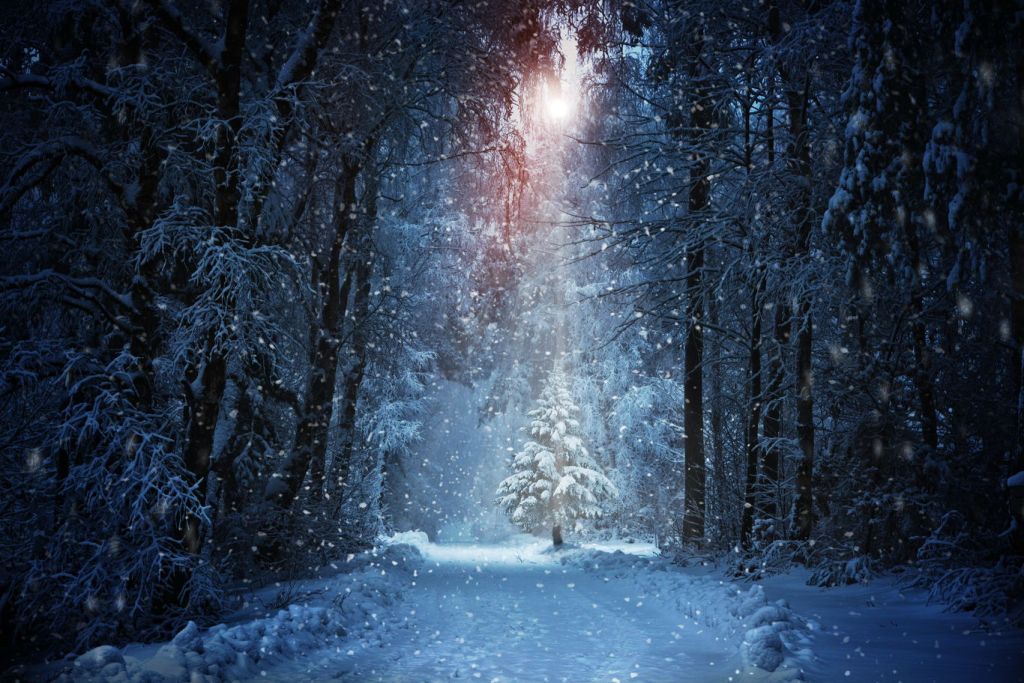
Me neither. But there’s another reason that Christmas is intrinsically melancholic, and that’s because it’s the festival that takes place in the dark. (Indeed, that’s pretty much the reason for its existence.) If Easter conjures an image of spring meadows full of hopping bunnies and daffodils bursting into bloom, then the spirit of Christmas lies somewhere deep in a European forest, under a carpet of snow in the dead of night.
There is a thrilling, fairytale shiver of wintry darkness in the heart of Christmas that’s just as essential as the boozy merriment: for every Deck the Halls, there’s an In the Bleak Midwinter; for every Wonderful Christmastime, a Last Christmas; for every Noddy Holder, a Charlie Brown. As those tidings keep reminding us, it’s as much about finding comfort as joy.
A few years ago, I interviewed A-ha’s Magne Furuholmen about his Christmas album, White Xmas Lies. With songs such as A Wintry Silence and ’Tis the Season to be Melancholy, it is exactly the Christmas record you would expect from one third of Norway’s premier purveyors of swooning, windswept pop desolation.
“I wasn’t trying to make a suicide manual for Christmas,” Furuholmen told me. “But for a lot of people, Christmas is about summing up the year, for good and bad. It can be easy to feel excluded from this communal celebration, so I wanted to make a Christmas record people could relate to, whether they were having a good time or not.”
Again, it is a record imbued with darkness – often literally, in songs like The Light We Lost, and in lyrical imagery of fire turning to embers, until only “the darkness of December” remains. In that sense, it is very much a product of the frozen north – that white, silent land that feels like Christmas’s spiritual home (and not just because Santa lives there).
“Certainly, here in Norway, there’s that long, dark period in our lives that tends to affect your thinking,” said Furuholmen of life in a country where, at Christmas, the sun never rises. “We tend to look at melancholy as a resource, not as a depressive thing. It’s a formulated yearning. It’s not about celebrating melancholia, as such. It’s more about celebrating all aspects of life. Our culture is unflinching, in a way. We’re not afraid of the dark. We’re born into it.”
Another Norwegian singer, Aurora, said pretty much the same thing when I spoke to her a few years earlier: “It’s just how we are. We have very dark winters, so we’re made to be melancholic. But I think darkness can be beautiful. And it makes the light even more beautiful.” This, for me, cuts right to the heart of Christmas – where those twinkling fairy lights are only able to work their magic because they are surrounded by darkness.
“We tend to look at melancholy as a resource, not as a depressive thing. It’s a formulated yearning. It’s not about celebrating melancholia, as such. It’s more about celebrating all aspects of life.”
Magne Furuholmen
If Furuholmen and Aurora (and if you haven’t heard her gorgeous version of Walking in the Air, by the way, I’d urge you to correct that immediately) are all about embracing the darkness, then Steven Moffat, that fine poet of the television age, found a beautifully optimistic way of framing the bleak midwinter, describing Christmas in one of his spookily magical Doctor Who episodes as being “halfway out of the dark”. And what better way of marking that halfway staging post than with a celebration of love and family, of peace on Earth and goodwill to all men and – yes – with some pretty lights to mark our way? Grouch all you like about the tacky, grasping, commercial side of Christmas – with its Black Friday brawls, rip-off ‘winter wonderlands’ and the bloody Coca-Cola truck – but chuck out the tree and the shiny baubles and December would basically just be an early January. And no-one’s clamouring for an extra slice of January, are they?
Over the years, I’ve taken an increasingly literal approach to the business of trying to recapture the magic of childhood Christmases – by, for example, re-watching the films and TV shows I loved back then. And I’m far from alone in this: during December, Twitter is full of people slipping into a warm nostalgia bath of The Box of Delights or A Charlie Brown Christmas. Though I suspect, like me, the magical, transcendental moment they’re looking for always remains tantalisingly just out of reach.
For me, no festive nostalgia bomb was more achingly bittersweet than the one a few Christmases ago when Disney released Rogue One – a Star Wars prequel perfectly calibrated to summon the spirit of 1978 like a genie from a lamp. Given that I was seven in 1978, it felt like my own past was being rewritten in front of my eyes, which was kind of wonderful – especially the very last shot of the film in which [spoiler alert] the young Princess Leia is handed the Death Star plans that, a long time ago, in an Odeon far, far away, the young me watched her place inside R2-D2. “What is it they’ve sent us?” asks a rebel trooper. “Hope,” says Leia. Hope.
And then, two days after Christmas, Carrie Fisher died – the latest in that cursed year’s savage roll call of fallen icons – and another little piece of my childhood detached and floated away. So much for hope, I thought.
Being home in Leeds for Christmas that same week, I decided to take a walk through some old haunts, including the fields behind my middle school, which I haven’t visited for more than 30 years. Staring through the fence, I tried very hard to feel a connection across the decades, but it was a disappointingly weak signal – less of a Proustian rush and more of a dribble. Perhaps it had simply changed too much: there are new housing estates and, in a dispiriting sign of the times, the playground is now a car park. Plus, as I was walking along, daydreaming and craning my neck to see the spot where the dining hall used to be, I skidded in a large pile of dog shit. So I guess that proves what Memory Lane is paved with.
If all this left me feeling strangely conflicted and slightly morose, then perhaps that’s only right. The word nostalgia, after all, derives from the Greek nostos, meaning “return home”, and algos, meaning “pain”. It means, essentially, that coming home is painful – but in a wistful, yearning, strangely beautiful way.
Some people are sniffily dismissive of nostalgia, claiming it stops you living in the moment or looking to the future. But those people are basically dead inside. I mean, why consign the entirety of your lived experience to a locked chest, never to be opened again? Isn’t that basically saying your life is disposable, forgettable, tomorrow’s fish and chip paper?
My dad was a nostalgia junkie, so this is probably just one of the many ways in which I’m slowly turning into him. In his later years, he was constantly returning to the scenes of his youth, and also enjoyed visiting the graves of dead celebrities he had admired in his formative years: I recall a memorable afternoon helping him find the burial plot of crooner Frankie Vaughan in a Jewish cemetery in North London, before moving on to Billy Fury’s final resting place a few miles down the road. And if you think that’s morbid, on another family holiday, we went to visit the stretch of road where Eddie Cochran died in a road accident – Mum, Dad, my sister and I all lined up on the roadside, solemnly trying to imagine Eddie’s final moments.
Dad died in 2008 – at Christmas, which is another reason the season stirs up so much emotional silt. Plus there’s my age, of course. (I’m now in my 50s, so very much in the era of – to steal the great Victoria Wood’s excellent pun – the Midlife Christmas).
A few years ago, all this emotional churn was amplified further when Covid did its Grinch act, and effectively stole Christmas from under our noses. Maybe that ought to serve as a useful reminder, as we gather in hot rooms to hug our loved ones, to be grateful for the things we’ve got, instead of chasing after the things we’ve lost. Unless, that is, chasing after the things you’ve lost makes you exquisitely happy-sad, in which case, knock yourself out and have a good old Christmas ugly cry. I suspect you’ll feel better for it.
 Interesting Media